Probably Stolen Money Guide
How money actually works in Probably Stolen — where it comes from, why rent shapes every decision, and what the win condition of buying out the shop really costs — with the developer's confirmed systems kept separate from a single preview build.
You make money by buying below value and selling above it, and the skill that decides whether you profit is appraisal. Every credit goes toward one goal the developer states outright: earning enough to buy out your shop before rising rent forces your hand. A hands-on preview adds the texture — a 15% retail markup you can haggle, appraisal commissions, the Dumping Grounds and information brokering — but treats the shop buyout as a long grind, so keeping the weekly rent paid matters more than any one big score.
Evidence level: Confirmed Preview build The core systems below — rent, appraisal, customer risk, licenses and the buyout objective — come straight from the official Steam description. Everything marked Preview build comes from a single hands-on preview of one build, is not developer documentation, and has not been reproduced by this site. Preview figures can change before release. Sources last checked September 2, 2026.
The win condition: buy out the shop
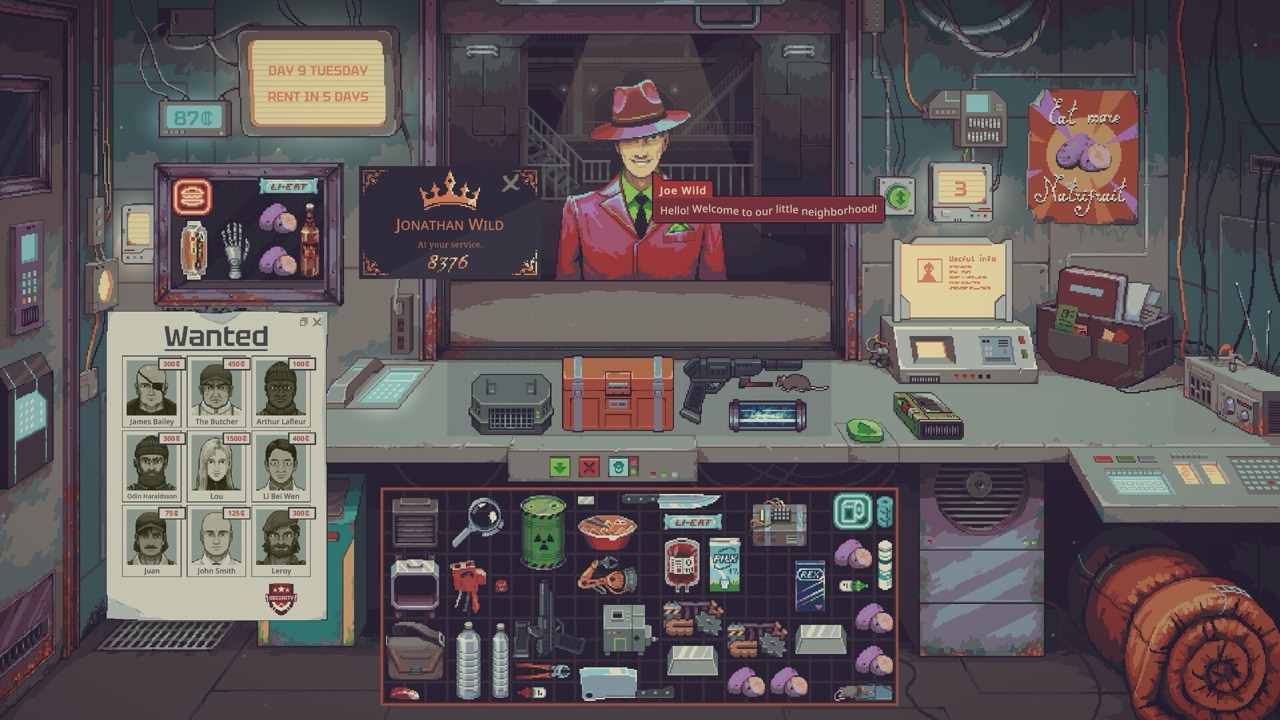
The stated objective is to earn enough to buy out your shop before rising rent forces your hand.
A hands-on preview describes how a run opens: you begin on a Mentor's loan that, in the reviewer's words, only covers enough to get the shop running — not enough to buy the shop itself. Owning the shop outright is the victory condition, so the loan is a starting position, not a shortcut. Preview build
The same preview sets the scale: the reviewer reports being only about a third of the way to buying out the shop after roughly 100 in-game days. Read that as a rough sense of pace from one build, not a fixed price — it tells you the buyout is a long grind, which is exactly why the rent section below matters. Preview build
Where the money comes from
Profit starts with the counter. The developer is explicit that you buy below value and sell above it, and that “misjudge the item or the person selling it, and you absorb the cost.” Rare items need proper appraisal to avoid overpaying. Cigarette packs need visual inspection before resale. Suppliers overstate value.
Around that core loop, a hands-on preview describes several income lines. All of the figures and routes in the table below come from that one preview build:
| Income line | What the preview reports |
|---|---|
| Trading margin Preview build | Trades carry a 15% retail markup. You can haggle a seller's price down and a buyer's price up to widen it. |
| Appraisal commission Preview build | Doing appraisal work — inspecting details, condition, seals and markings — pays a commission on its own. The rate is not stated. |
| Dumping Grounds Preview build | You can pick up junk, or occasionally something more valuable, at the Dumping Grounds and resell it. |
| Information brokering Preview build | Suspicious customers sell price-sensitive classified information, letting you time buys and sales around it. |
| Specialisation lines Preview build | The full game is reported to have 10 specialisations; the preview build only opens the Apprentice. |
The developer side of specialisation is confirmed even if the count is preview-only: the high-margin lines are gated. Unlock advanced licenses to access the underground market. Some trades need heavy machinery and permits. navigate cutthroat politics and build connections with the right factions to get exclusive deals.
Why rent decides every decision
Rent increases over time regardless of how well your week went. Falling behind reduces store attractiveness, which reduces customer traffic, which reduces revenue — widening the gap.
That compounding is the whole reason a steady income beats a lucky one. Because a missed payment lowers attractiveness, which thins customer traffic, which cuts the revenue you needed to catch up, the gap does not stay the same size — it grows. A single high-margin deal that goes wrong can drop you into that spiral, while the boring routes above keep the rent covered.
This is also why the preview's 100 days for a third of the buyout reads as a warning rather than a target: the buyout is slow, so the run is won by not losing to rent long enough to get there. Protecting the recurring payment is worth more than chasing any single large margin.
Where players lose money
Most losses do not happen when you sell — they happen when you buy, or when you take a risk that fails.
- Appraisal misjudgement at the buying counter. Suppliers overstate value and rare items need proper appraisal; pay too much for something you misread and you absorb the difference. This is the developer's stated core failure.
- Reading the person wrong. Today’s customer could be Security fishing for evidence, a revolutionary seeking leverage, or a fallen elite testing your usefulness. Approve, refuse, report, or look away — someone is always taking notes. You have four responses to any transaction — approve, refuse, report, or look away — and reputation buys access and protection, but it also paints a target on your back.
- Contraband that gets caught. Hide stolen goods and contraband from the authorities, or bribe your way out if you get caught. Contraband brings raids. The high-margin routes carry the heaviest consequences, so a raid can erase far more than one deal was worth.
What is not confirmed yet
This page stops where the sources stop. The developer has not published the numbers that would let you plan a precise money curve, and the preview figures above are from one build:
| Question | Current evidence |
|---|---|
| What does buying out the shop cost? Unknown | No exact buyout price is published. Only the preview's rough pace — about a third after ~100 days — gives any sense of scale. |
| How fast does rent rise? Unknown | Rent is confirmed to increase over time and compound, but no rent curve, interval or amount is published. |
| What are the exact commission and markup rates? Unknown | The preview names a 15% retail markup and an appraisal commission, but the appraisal rate and any other percentages are not stated. |
| What do the other specialisations earn? Unknown | The preview reports 10 specialisations with only the Apprentice open. The income profile of the rest is not shown. |
| Do the preview figures match the current build? Unknown | The 15% markup, the ~100-day pace and the income lines come from a single preview build and may change before release. |
Each row gets a confirmed number once one is published or reproduced — not before.
Probably Stolen money FAQ
What is the fastest way to make money in Probably Stolen?
There is no confirmed fast route. The developer describes profit as buying below value and selling above it, which depends on appraising items correctly. A single hands-on preview adds that trades carry a 15% retail markup you can push in your favour, that appraisal work itself pays a commission, and that the Dumping Grounds and information brokering are extra income lines. Those preview details come from one build and may change.
Can you buy the shop in Probably Stolen?
Yes — the stated objective is to earn enough to buy out your shop before rising rent forces your hand. A preview reports that you start on a Mentor's loan that only covers getting the shop running, not owning it, so buying it out is the long-term win condition rather than something you can rush.
How long does it take to buy the shop in Probably Stolen?
The exact buyout price is not published. One preview reviewer reports reaching only about a third of the way to owning the shop after roughly 100 in-game days, which frames the buyout as a long grind. That is a single preview account of one build, not a confirmed figure.
Why does rent matter more than one big sale in Probably Stolen?
Because rent increases over time regardless of how well your week went, and falling behind compounds: lower attractiveness means fewer customers, which means less revenue, which widens the gap. Protecting the recurring rent payment stabilises that spiral, whereas one high-margin gamble that fails can push you further behind.
Does appraisal make money in Probably Stolen?
Two ways, on current evidence. Correct appraisal is how you avoid overpaying when buying, since suppliers overstate value and misjudging an item means you absorb the cost. A preview also reports that doing appraisal work — checking condition, seals and markings — pays a commission on its own. The commission rate is not published.
Related pages
- All starting scenarios compared— which specialisation you open with decides how you earn and how you can fail.
- Water: Moisture Farm & Water Merchant— a worked example of one product line, with the figures legible in the official screenshots.
- Game wiki— every confirmed system, item and NPC in one index, each with its verification status.
- All published guides— the current index, including which guides are still waiting on evidence.
Sources
- Probably Stolen on Steam — official store description — the source for rent pressure, appraisal, customer risk, licenses, factions, contraband and the shop-buyout objective quoted above
- Probably Stolen preview — The Wand Report — single hands-on preview of one build — the source for the Mentor's loan, the 15% retail markup, appraisal commissions, the Dumping Grounds, information brokering, the ~100-day pace and the 10 specialisations; preview figures may change
- Probably Stolen Steam Discussions — open player questions about making money and buying the shop that this page tracks